If you have ever sold a house in the UK, you know the drill: no energy performance certificate, no sale. Spain works the same way. Different paperwork, different register, same principle. Here is who issues it, how you get one and what it costs you to skip it.
In Spain the Ministry of Industry, Trade and Tourism (Ministerio de Industria, Comercio y Turismo) requires a property to hold an energy performance certificate (certificado energético) before it goes on the market, whether to sell or to let. Complete a sale or sign a tenancy without one and the owner can be fined between €300 and €600. Not ruinous, but entirely avoidable.
That is usually where the questions start: who issues the energy performance certificate, how you get hold of one, and what it is actually for. At Klic Arquitectos we answer these week in, week out, so here is the short version.
What the energy performance certificate is for
It comes from a European Union measure to keep track of energy consumption — electricity, gas and the other services a property runs on. The British EPC has the same parentage, which is why the Spanish version will look familiar to anyone who has bought or sold back in the UK.
Its value is practical: it gives a future owner or tenant a reasonable idea of what the property will cost to run day to day.
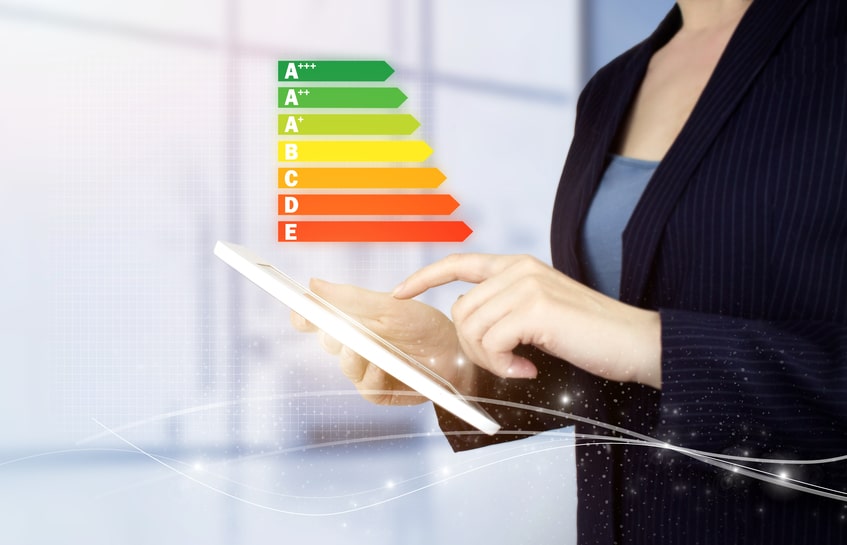
The certificate is also what earns the property its energy label: the same scale you see on white goods, running from A in green for the most efficient home down to G in red for the least.
Energy performance certificate: who issues it
Under Royal Decree 235/2013 (Real Decreto 235/2013), the certificate can only be issued by professionals qualified to draft or supervise building projects. In practice that means an architect or an equivalent technical professional. Not the estate agent, and not the seller. It is work we do ourselves, as architects in Málaga.
If you would rather we handled it, we come out to the property, carry out the checks, take measurements and record the data on site. It is a visit, not a desk exercise. Anyone offering you a certificate without setting foot in the property is worth a second thought.
How to get an energy performance certificate
Five steps. Step two is where overseas owners tend to get caught out, because the certificate is not finished until it is registered with the regional government, not with the town hall.
- Instruct a qualified professional, authorised to issue a report on the property’s energy consumption.
- Register that report electronically. In Andalucía that means the Junta de Andalucía’s virtual office (Oficina Virtual): open the Registros tab and select Registro de Certificados Energéticos Andaluces. The Royal Decree makes registration with the competent body of each autonomous region compulsory, so a property outside Andalucía goes through a different portal.
- Complete the PDF the portal produces. The first thing it asks is whether this is a new registration, an amendment, a renewal or a cancellation. Then work through the form.
- Blocks 6 and 7 ask for the details of the certifying technician.
- Fill in the remaining fields, attach the supporting information, then date and sign the document.
How much an energy performance certificate costs
Knowing who issues the certificate is one thing. Knowing what you will be charged is the other half of the question.
The fee moves with the size, the type and the location of the property, so no single figure is worth quoting here. Ask two or three professionals, compare like with like, and check what each quote actually covers: the site visit, the report and the registration are not always inside the same price. Cheapest is not automatically best either. The certificate carries the signature of whoever issues it.
That should cover the basics: who issues an energy performance certificate in Spain, what it is for, and the steps to getting one. If you want more on Spanish property and the paperwork that comes with it, there is plenty more on our blog.