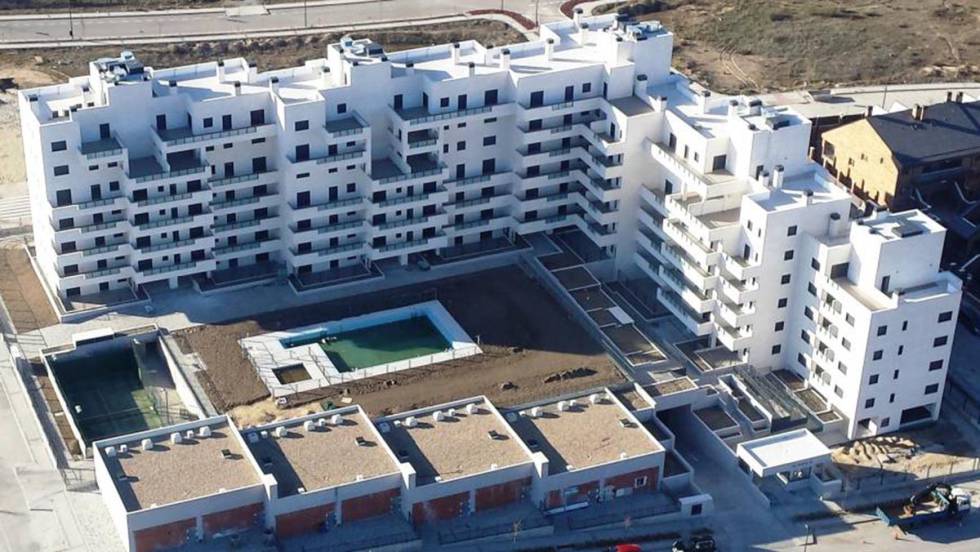
This week’s post, part of our #hacermemipropiacasa series on building your own home, looks at a self-build route for collective housing: the Spanish housing co-operative (cooperativa de viviendas).
For years this was an ordinary way to get a flat built in Spain. It fell out of use as property developers took over the market. It is now coming back, carried by cohousing and by the newer refurbishment co-operatives. In Andalucía there is an extra argument: co-operatives qualify for exemptions and reliefs on several taxes, and for better lending terms.
If you are coming from the UK or Ireland, the closest reference points are community-led housing, a self-build group or a housing co-op. The Spanish version, though, is a formal company with its own legislation, its own governing body and its own accounts. It is a model most buyers here have never had explained to them, so here is how one actually works.
First things first: what is a housing co-operative?
A co-operative is a way of getting people into housing without a developer in the middle. A group of individuals or legal entities (public bodies or non-profit organisations) join together to become the self-developers and the eventual owners of their own homes. They take on the developer’s job themselves, so the developer’s profit disappears from the price. Members pay cost, not cost plus margin. What comes first is what the members need, not a commercial return.
The co-operative can buy land, subdivide it, service it and develop it, in order to provide its members with homes, commercial units, buildings or facilities. It can also take on refurbishment work on existing buildings.
It is a company run democratically by the people who will live in it. Members take an active part in running it and in the construction process itself. Like every other co-operative, it works on equal rights and obligations between members, free entry and voluntary exit. One member, one vote.
Day-to-day administration is usually handled by a management company (gestora de cooperativas). It is not the developer, and it is not the co-operative. Depending on what the members decide, it may look for further members, find the land, find the building contractor and deal with the paperwork and permissions. Even so, every step it takes has to be approved by the governing board (Consejo Rector) and reported back to the members.
Why choose this model?
- It costs less. As with self-build generally, taking on the developer’s role removes the developer’s margin, because there is no commercial profit to make. On top of that, Andalucía offers tax advantages. Notary fees, Land Registry fees and the rest of the formalities generally come to less than in a straight purchase, and mortgage terms are usually more favourable.
- Homes designed around the group. This matters most when the members share a particular need or outlook. Older people looking for somewhere they can grow old comfortably, with company and with shared care arrangements that cost far less pooled than bought individually — that is cohousing. Families with a member whose mobility is restricted, who need a layout adapted to it. Or a group that shares a strong environmental position and comes together to build sustainable homes.
- Customisation of materials and finishes. In the standard market model the flat is already fully defined before you see it. Here you can still take decisions on layout and materials as the building goes up. You are building your own home, so you can build it to suit you.
- Participatory and democratic. Decisions affecting the whole scheme are taken by majority, and each member has one vote.
- Information and transparency. Members have a right to be kept informed, and the process has to deliver on it.
- You can leave. A member has the right to withdraw voluntarily and to recover everything paid in on account of the home. If the departure is treated as unjustified, the member forfeits 5% of that money. That does not happen when you buy from a developer. Many co-operatives keep a waiting list, so a departing member is simply replaced by the next one.
- Insurance. If the contractor fails to hand the homes over on the agreed date, an insurance policy covers the amounts the members have paid in.
And the drawbacks
- You have to put money in up front to get the work moving, starting with buying the land.
- Then there is the price. It should start out lower than buying a finished home, but it can rise if something unforeseen turns up in the planning stage or on site. A turnkey contract with the builder is one way of holding that risk down.
- Timescales are longer, for the obvious reason that the home does not exist yet.
- Deciding things collectively wears you down. Sooner or later you will have to give ground on something.
- There have been cases of management companies defrauding their members. This is where people get caught out — though that risk is hardly unique to co-operatives.
To put some flesh on this, here are several Spanish housing co-operatives worth a look. All four articles are in Spanish.
A co-operative in Madrid: financial and energy sustainability
A co-operative in Barcelona: La Borda
As with every other form of self-build, the risk sits in how well the process is run and controlled. Members almost never have prior experience of developing housing through a co-operative. To avoid the usual problems and keep things moving, get sound legal and technical advice in place from the start.
At Klic Arquitectos we advise on this kind of scheme. Fill in the contact form and we will get back to you, or simply give us a call.