Discover the steps to building a house in Spain successfully. We explain everything!
Buying an existing house that fully suits your needs can be a laborious and stressful process. What’s more, you will most likely have to carry out a series of renovations to adapt it to your lifestyle and that of your family.
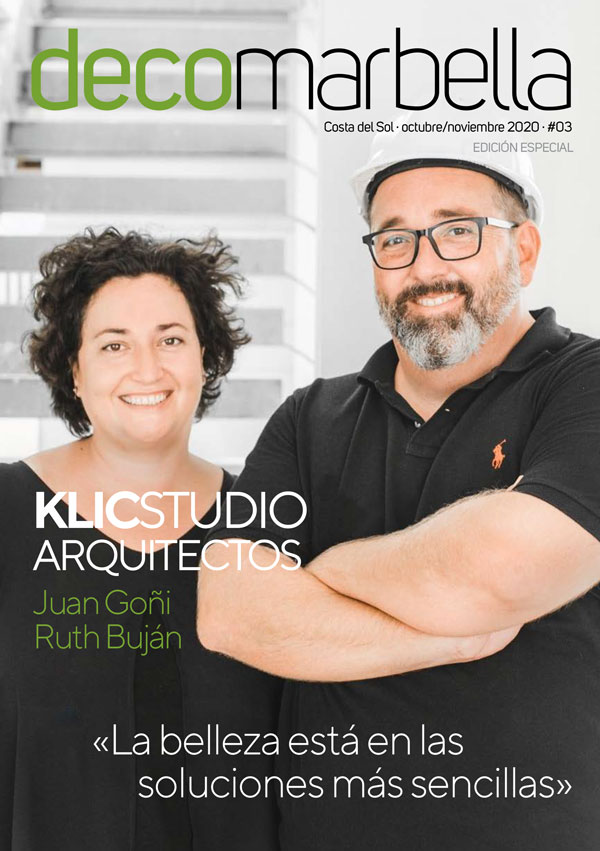
However, the home of your dreams, made entirely to measure, can become a reality if you decide to build it from scratch. The result will undoubtedly be rewarding, but if the construction process is not handled properly, it can cause one headache after another. Throughout this process, relying on professionals such as Juan Goñi, architect in Málaga, and his team of architects can make the difference between a successful build and one full of setbacks.
That is why today at Klic Arquitectos we explain the steps to building a house in Spain without losing your mind along the way. Want to know what they are? Read on!
Steps to building a house on a plot of land
1. Study the plot and buy it
The land is the foundation of any build. Choosing it is the first of all the steps to building a house, and perhaps the most important. It will not only determine key aspects such as the size or design the house can have; you will also need to study other factors such as its slope and orientation, which will be taken into account when planning insulation and heating and cooling. In an earlier post on our blog we explained how to split a plot (segregar una finca).
It is also vital to know the plot’s zoning (calificación) under the town plan (plan urbanístico or PGOU), as this can limit the height, size, design or even the use of certain building materials. The best approach is to ask an architecture practice in Málaga to assess it, both in terms of planning regulations and to identify its geotechnical and topographical constraints.
2. Designing the project
Once you have the plot, it is time to start shaping your idea of a single-family home or multi-family housing. Meet the architect to discuss the requirements the building must meet (number of storeys, number of bedrooms, layout) and your style preferences.
From then on, the architect will start working on the design of your future home. Once you have approved it, it is time to draw up the project: the basic design (proyecto básico) and the construction project (proyecto de ejecución). This last step is what allows you to apply for permits and mortgage finance.
3. Obtaining the permits
One of the steps to building a house in Spain that can be the most tiring, but which is undoubtedly necessary, is obtaining all the permits required for the build. To obtain the building permit (licencia de obras), granted by the Town Hall (Ayuntamiento), the project must be approved by the municipal architect and the council’s technical officers, who will check that it complies with the regulations.
Once the building permit has been granted, you can go on to apply for all the other construction-related permits: for machinery access, for placing a skip on the public highway, and so on.
4. Finance
Although some of the paperwork can be moved forward during the previous steps, you will not be able to sign your mortgage with the bank until the building permit has been granted.
As for financing the purchase of the land, a personal loan is usually taken out, which is then incorporated into the mortgage once the project has been approved.
5. Construction
The dream begins to come true. With single-family homes, in most cases the owner acts as the developer (promotor). Therefore, for legal and health and safety purposes, responsibility is shared between the owner and the building contractor.
Look for a building contractor you can trust. Ask around, do your research, and request quotes as well as construction timescales. It’s time to get started!
6. Certification
A technical expert (perito) generally handles the certifications (certificaciones) for the work already completed, based on the agreed milestones and delivery deadlines.
In this way, the certificate of completion (certificado final de obra) is what, in technical and legal terms, formally marks the completion of the house.
7. Registration and licence
Finally, with the certificate of completion (certificado de fin de obra) in hand, you can register the house with the Cadastre (catastro).
Once this is done, you go to the Town Hall to apply for the first occupancy licence (licencia de primera ocupación), which allows you to set up gas, electricity and water supplies.
We hope this article has helped you understand the steps to building a house in Spain. It’s time to make your dreams come true!