Thinking of glazing in the terrace on your Costa del Sol flat? Before you call an installer, it pays to know the types of terrace enclosures used here — and what the Spanish rules have to say about them.
The terrace is usually the best part of a home on this coast. A terrace enclosure lets you use it all year round: you keep the view and the light, and you leave the wind, the dust and the odd November downpour on the other side of the glass.
It works as well in a private home as in hotel architecture. You can heat and cool the space, the dust stays outside, you gain usable floor area, you cut the noise from the street and you get more privacy from the neighbours.
At Klic Arquitectos we treat the terrace as a real room, not an afterthought. The right system is what keeps you warm in January and stops the terrace turning into a greenhouse in August — and a good deal of the answer depends on the façade you are glazing into.
What to check before you enclose your terrace
Four things are worth settling before anyone comes to measure up:
- Your community of owners. Flats in Spain sit under a comunidad de propietarios, roughly the equivalent of a residents’ management company under British leasehold. Spain’s Ley de Propiedad Horizontal treats the façade as a common element, so unless the statutes already allow the enclosure you are asking the owners’ meeting for permission, not telling it. Those statutes often fix the system, the colour of the aluminium and the awnings allowed, so that the block stays consistent. Ask first, and ask in writing.
- The paperwork. Depending on the system and on where you are, this kind of work may need planning permission (licencia de obras) — Málaga, Torremolinos and Benalmádena each apply their own criteria. There is a quieter issue too: an enclosure can count as extra built floor area, in which case the flat as built no longer matches the deeds or the cadastral record (Catastro). That tends to surface when you sell. Sorting it out first saves you a complaint from a neighbour and an awkward conversation later on.
- Orientation. Facing south, the enclosure stores natural heat and gives you a comfortable winter, but in a Málaga summer it can behave like a greenhouse. Facing north, it will be noticeably colder. Orientation drives your running costs, which is why the insulating materials matter more than the catalogue suggests.
- Natural light. Make the most of the sun. If there is too much of it, plan for curtains or blinds from the start rather than bolting them on afterwards.
Types of terrace enclosures
There is plenty of choice in terrace enclosures, and the systems differ in the materials used and in the way they open:
Sliding windows and doors
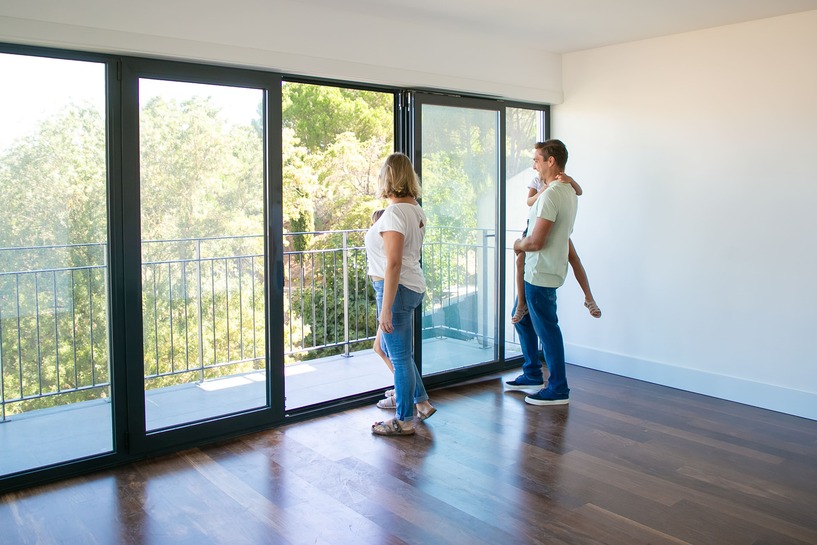
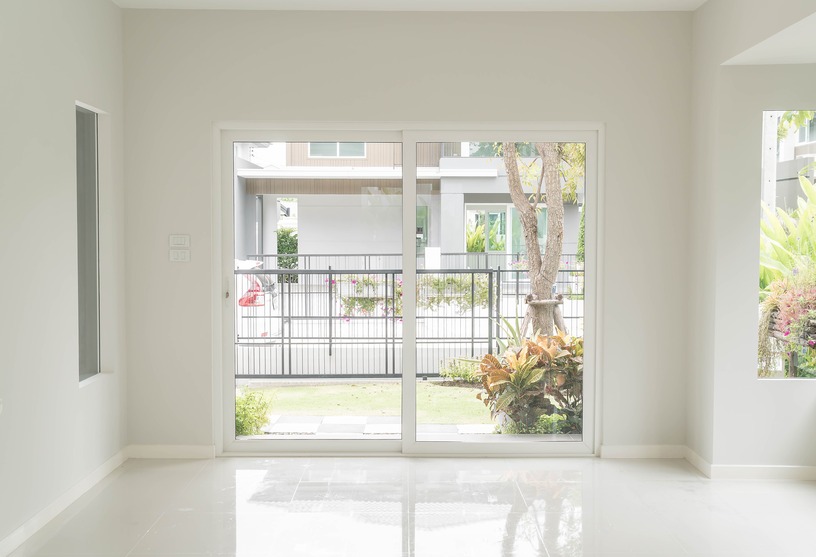
The most common option in homes here. The glazed panels slide left and right and stack against one another on a single track, so you can open part of the terrace at a time.
It is a simple system, and it gives you the choice every morning: open the terrace and sit in the sun, or close it and gain a room.
Folding enclosures
Bi-folds, in British terms. The panels fold back against one another, concertina style, so you can open the whole span and reclaim the terrace completely. Available in aluminium, timber or PVC.
Glass curtains
The simplest system of the lot, and the one that gives you a full panoramic view with nothing in the way. The glass panels are joined to each other along their vertical edges and framed only top and bottom; ask for it locally by its own name, cortina de cristal. Worth knowing: it is not airtight, so treat a glass curtain as shelter from wind and rain rather than as an extra insulated room.
Half-height enclosures
The right answer for balconies and for terraces in blocks of flats: the glazing sits on top of the existing masonry wall.
Fixed or retractable roofs
An enclosure does not have to be a window or a door. The same idea works overhead, so you can sit outside without being out in it. Roofs suit generous spaces such as covered terraces and penthouse (ático) roof terraces, and you can choose between a fixed roof and a retractable one.
Common materials for terrace enclosures
- Timber. Warmer and more elegant to look at. Best kept to the inner face of the house: on the weather side the coastal climate will get at it, and the maintenance it then demands pushes the cost up.
- Aluminium. The most widely used material. Ask for profiles with a thermal break (rotura de puente térmico) — that is the part doing the insulating work, and it is what lets you use the terrace in any season.
- PVC. Also very common, and it insulates just as well, but it costs more than aluminium.
Done properly, a terrace enclosure gives you a room you can use in every season, and it still feels like being outside.
Our team of architects in Málaga can tell you which system your community and your town hall will accept, and which materials are worth paying for on your particular façade. If you are weighing up an enclosure, ask us before the installer measures up — it is a good deal cheaper than undoing it afterwards.