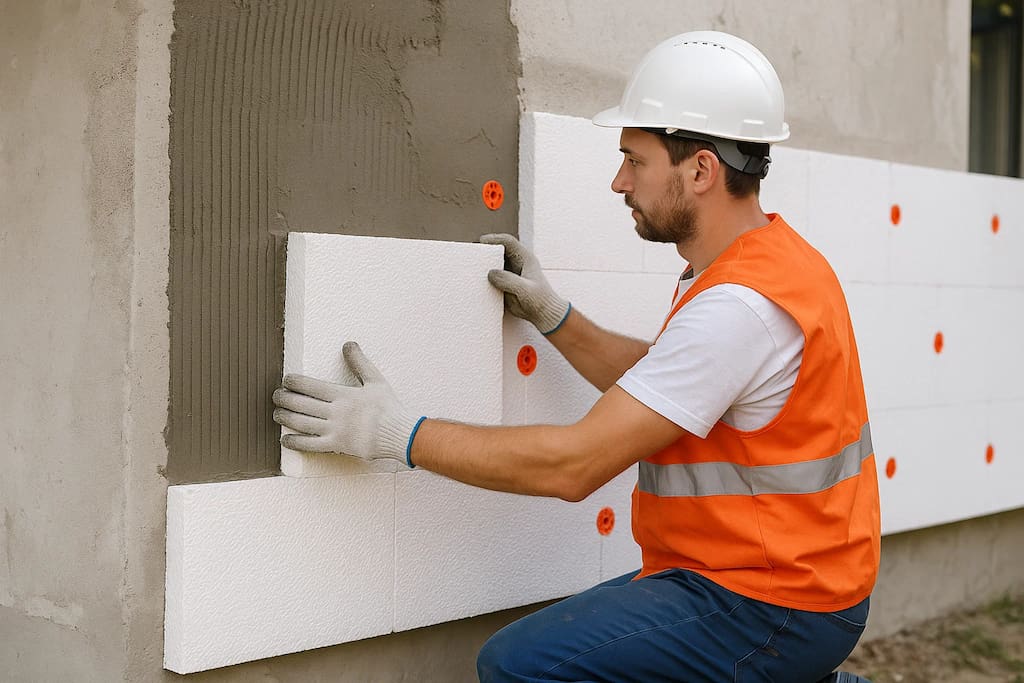
External wall insulation in Spain goes by an acronym: SATE, short for Sistema de Aislamiento Térmico por el Exterior. It is what a British builder would call EWI — insulation fixed to the outside face of the building and then rendered over. It improves energy performance and comfort, and cuts the demand for heating and cooling. It is one of the systems we are using right now at our architecture practice in Málaga.
How does SATE work?
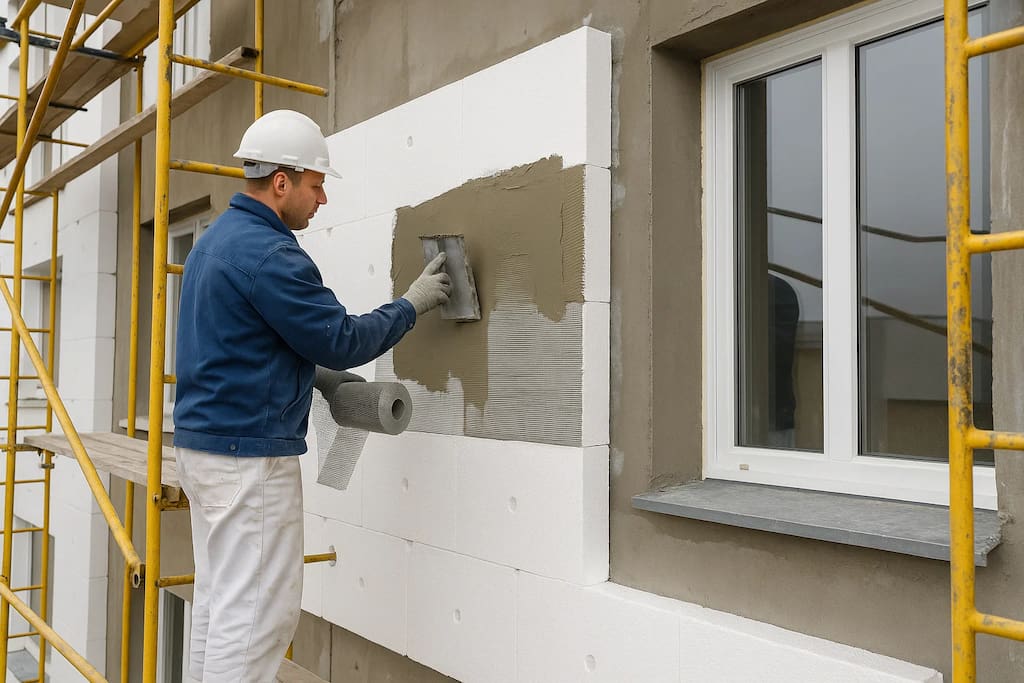
Insulation boards are fixed to the outside of the façade with adhesive and mechanical fixings. A glass fibre reinforcing mesh goes over them, and the whole build-up is finished with a protective decorative render. Nothing is touched inside the home, and nobody has to move out while the work goes on.
What are the advantages of a SATE system?
SATE does more than keep the heat out. The gains are practical, financial and visual at once, which is why it is the usual answer when an envelope needs bringing up to date. It also shows up on the energy performance certificate (certificado de eficiencia energética). That is compulsory in Spain when you sell or let, just as an EPC is in the UK. The main advantages:
- A clear improvement in thermal and acoustic insulation
- Lower energy consumption
- Added value to the property
- Less façade maintenance
- A fresh finish to the façade
What materials are used in SATE?
The system is a set of layers working together to deliver insulation, protection and durability. These are the materials most commonly used, chosen according to the building and the level of performance required:
- EPS (expanded polystyrene)
- XPS (extruded polystyrene)
- Mineral wool
- Base coat render and final finishing coat
- Reinforcing mesh
How much does a square metre of SATE cost?
Between €45 and €90 per m², depending on the insulation material (EPS, XPS or mineral wool), the type of finish and how easy the façade is to reach. Access is a real cost driver: a façade that needs full scaffolding is not the same job as one you can work off a terrace. On larger jobs the unit rate comes down.
Which costs more, a ventilated façade or SATE?
A ventilated façade — rainscreen cladding, in British terms — normally works out dearer, at €120 to €180 per m² against the €45 to €90 of SATE. Which one is right depends on the building, the technical requirements and the budget. On housing refurbishment, SATE gives more back per euro spent.
What to check in Spain before you start
Two things tend to catch out overseas owners. First, if you own a flat, the façade is not yours: it is common property, and the works are decided and paid for by the owners’ association (comunidad de propietarios). Second, insulating from outside makes the wall thicker, so where a façade sits on the plot boundary or over a public pavement, the town hall gets a say. Either way the works need planning permission from the town hall (licencia de obras). Both points are worth settling before anyone prices the job, not after.
Why choose SATE over other systems?
There are other ways to insulate a building, but SATE holds up well in both refurbishment and new build. Set against the traditional alternatives, it wins on four counts:
- It does not eat into usable floor area indoors
- It improves the thermal behaviour of the whole envelope, thermal bridges included
- It goes up quickly, with no need to decant the occupiers
- The cost-benefit ratio is hard to beat
SATE is an efficient way to upgrade the envelope of a building. It saves energy, cuts the heating and cooling bill and renews the façade without invasive work inside. Against a ventilated façade it is cheaper and faster to install. One caveat worth saying out loud: on a protected or listed façade it is usually off the table, so settle that question early rather than late. If you are weighing up a refurbishment on the Costa del Sol, have a word with our architects in Málaga. We will tell you which system your building actually needs.