Luxury apartment design trends: what has actually changed in the design of high-end flats, and what it means if you are buying or refurbishing one on the Costa del Sol.
Design trends tell you a good deal about the moment that produced them. Two years of pandemic, and a strict lockdown here in Spain, changed what people ask of a home. In the luxury apartment market the shift is easy to summarise: more daylight, more open space, and rooms that have to earn their keep.
What follows is what we are seeing in the flats we work on in Málaga and along the coast. We have added a note to each trend on where it tends to run into the Spanish system, because that is usually where a good idea starts to get expensive.
Sustainable, practical luxury apartments
Architecture follows the times, and at the moment the times mean material shortages, longer lead times and a lingering interest in ventilation and daylight. Hence the pull towards a home that is sustainable and also works hard: fewer decorative gestures, more decisions that pay for themselves.
There is a balance to strike, though. The more time you spend at home, the less you want to live in a showroom. Flexible and multi-purpose is the brief; comfortable is the test.
Here is how it is being done.
Open-plan, multi-purpose space
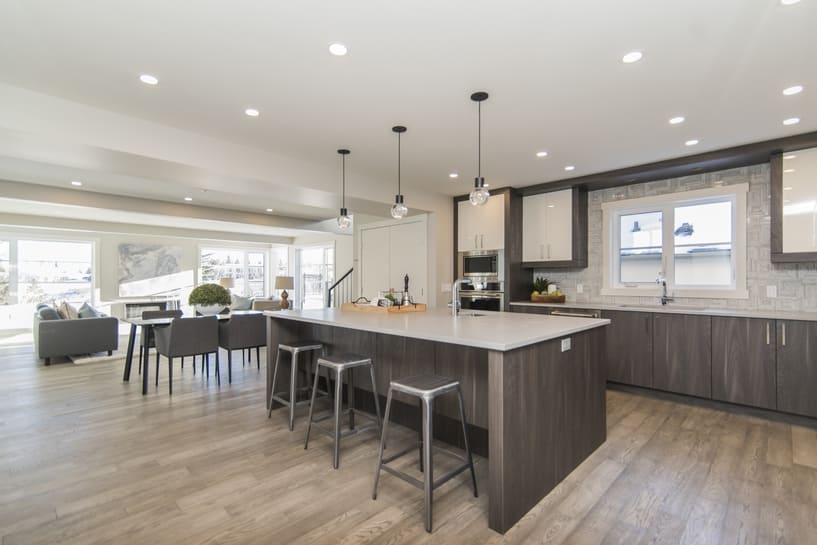
Generous rooms with few internal walls are still the default. The furniture does the zoning, so one space can take in cooking, eating, working and sitting without being carved up.
The caveat in Spain: before any wall comes down, two checks. Whether it is load-bearing (in coastal blocks built in the sixties and seventies, plenty are), and what the comunidad de propietarios allows in its statutes — the owners’ association that runs the building, with much the same say over alterations as a UK freeholder and managing agent combined. Even a straightforward internal strip-out needs consent from the town hall, either a minor-works licence (obra menor) or a self-certified notice (declaración responsable), depending on the council. It is an easy step to miss and an awkward one to fix afterwards.
Natural materials mixed with industrial ones
Timber, ceramic and glass, handled in a minimalist way, are what bring the warmth. They also read well in the strong light we get here, which is unforgiving of anything too glossy.
Set against them, steel and resin have gained ground. Used sparingly, the combination reads as considered rather than catalogue-perfect: warm surfaces you want to touch, hard ones that hold the composition together.
Designing with sustainability in mind
Environmental performance moves further up the brief every year. In practice it means layout and orientation done properly, so the flat takes what it needs from the sun in winter and keeps it out in summer, and consumption of non-renewable resources falls without anyone having to think about it.
Two Spanish specifics worth knowing. Refurbishment falls under the Spanish building regulations (Código Técnico de la Edificación, or CTE), which set the requirements for energy, acoustics and ventilation and apply to work on existing buildings, not only to new build. And you cannot sell or let a property in Spain without an energy performance certificate (certificado de eficiencia energética) — the same idea as a UK EPC.
Home automation
Using technology to make domestic life simpler keeps growing: lighting scenes, voice assistants, movement sensors, heating and cooling from a phone. Home automation (domótica) turns up in new build and in high-end refurbishment alike, and it is not going away.
One practical point. The cabling is cheap while the walls are open and expensive once they are closed. Decide on the automation at design stage, not when the plasterer has left.
Leave room for the art
Placing art properly is what separates a good flat from a very good one. Open plan and uncluttered only works if the walls have been planned: a run of wall kept free, lighting on its own circuit, enough distance to stand back and look.
Do that at design stage and the pieces get the light they need and hold their own place in the room. Do it afterwards and you end up hanging things wherever the sockets happen to be.
The through-line in all of it: balanced compositions, open and workable space, a warm sort of minimalism, technology built in rather than bolted on, and sustainability taken seriously instead of mentioned.
If you are weighing up a flat and want architects in Málaga who will tell you what can and cannot be done to it before you commit, that is the sort of work we do week in, week out. Klic Arquitectos, Torremolinos.
Rate this article on luxury apartment design trends.