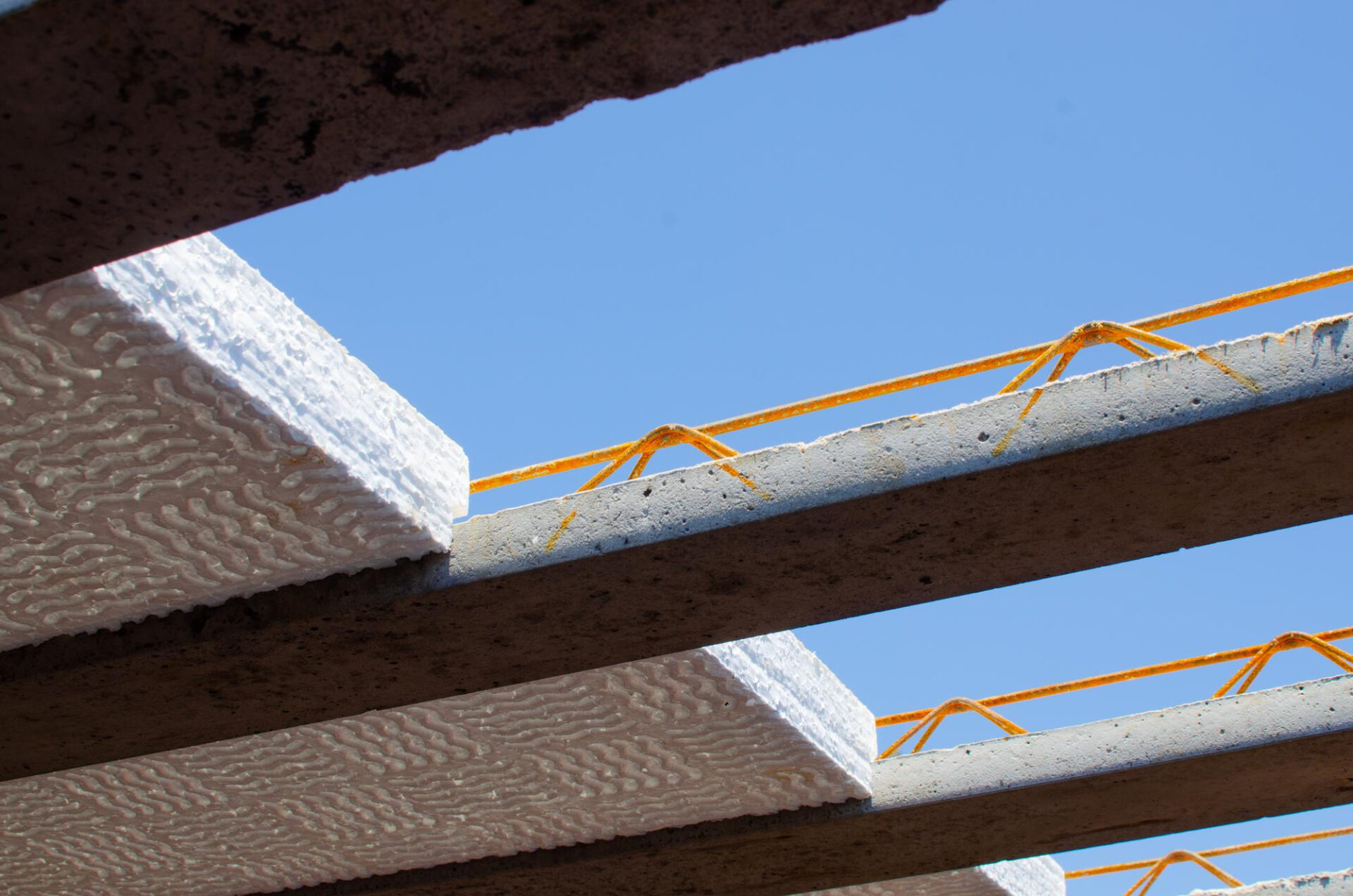
For external walls, the insulation that usually performs best is extruded polystyrene (XPS): high thermal resistance, it barely takes on water, and it holds its shape for decades. That combination is why XPS turns up not only on façades but also on roofs, floors and foundations. Boards such as the URSA XPS F N RG I are a common choice here for exactly that reason — solid thermal performance in a panel that copes with damp.
Choosing the best thermal insulation for external walls matters more on the Costa del Sol than most British buyers expect. The problem here is not only keeping heat in during January; it is keeping it out in August. Whether it is a detached house inland or a flat near the seafront, the first thing we look at as an architecture practice in Málaga is the building itself: how the walls are built, which way they face, and what state the render is in. That is what decides the sensible option and the budget, not the brochure.
Thermal insulation: the materials and what they are good for
A thermal insulator is simply a construction material that slows the transfer of heat through whatever it is fitted into. Fit it on the outside and the whole wall works with you instead of against you.
External insulation has three parts: the insulation itself, the fixings, and the finish. The boards are bonded to the wall with adhesive and mechanical fixings, and the system is then closed with a render coat. That finish is not only technical — it is also how the building looks, so the same job that cuts your bills can bring a tired 1970s block back up to date.
To judge which insulation is right, look at four things:
- Resistance to heat and cold: this is what keeps the inside temperature steady and cuts the losses, in both directions.
- Resistance to water vapour: this one gets overlooked. When damp air in the room meets a cold surface, it condenses — and condensation means mould. Get the vapour behaviour wrong and you have swapped a heating bill for a damp problem.
- Reaction to fire: the material should not be combustible, and its rating matters. Worth checking on any block of flats.
- Acoustic performance: the same layer that keeps heat out damps noise. On a busy street in Torremolinos or Málaga, that is often the benefit owners notice first.
As architects based in Málaga, we know our clients’ time is worth something, so we run the whole of a detached house project ourselves: design, planning, managing and supervising each stage on site, and the paperwork with the town hall that goes with it.
Types of insulation
These are the materials you will be offered on the Spanish market:
- Mineral wools — glass wool and rock wool.
- Polyurethane foam
- Expanded polystyrene (EPS)
- Extruded polystyrene (XPS)
- Cork
What is the best thermal insulation for external walls
SATE: the best insulation system for façades
The system we recommend most often is SATE (sistema de aislamiento térmico exterior) — what you would call external wall insulation in the UK, and ETICS across the rest of Europe. Insulation boards go on the outside face of the wall in layers, protected by a render coat, in the standard version or the aquapanel one. These systems are tested for permeability, impact resistance and abrasion before they reach site. Their real advantage is that they deal with thermal bridges — the columns, floor slab edges and other structural elements that leak heat straight through the wall. Done properly, SATE cuts winter heat losses by 70% and reduces summer heat by 30%.
Two things worth knowing before you get excited, because this is where owners here tend to get caught out. First, wrapping a façade changes the outside of the building, so it needs a works licence (licencia de obras) from your town hall, and it has to comply with the Spanish building regulations (Código Técnico de la Edificación). Second, if you own a flat rather than a house, the façade belongs to the whole block: the decision goes through the residents’ association (comunidad de propietarios), not through you alone. Neither is a reason not to do it. Both are reasons to plan it before you start ringing round for quotes.
Protecting the house you have bought is worth doing properly, and at Klic Arquitectos, architects in Málaga, we are glad to help you get the insulation right. You will find more on the subject in our blog, written for owners who want their house to work as it should.
Do not miss our most-read article: Trends for luxury apartments.
We look forward to hearing from you.