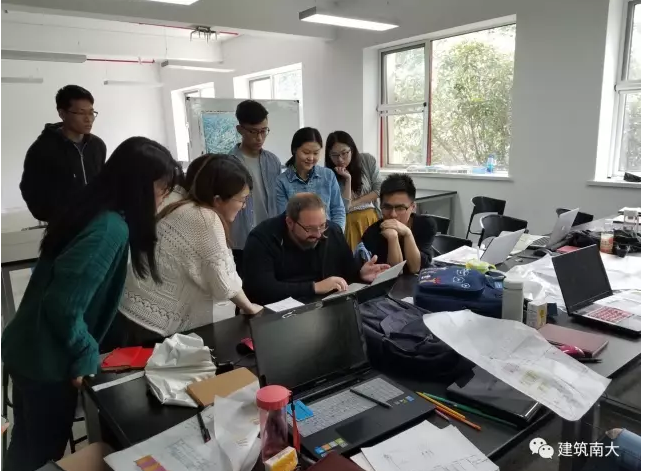
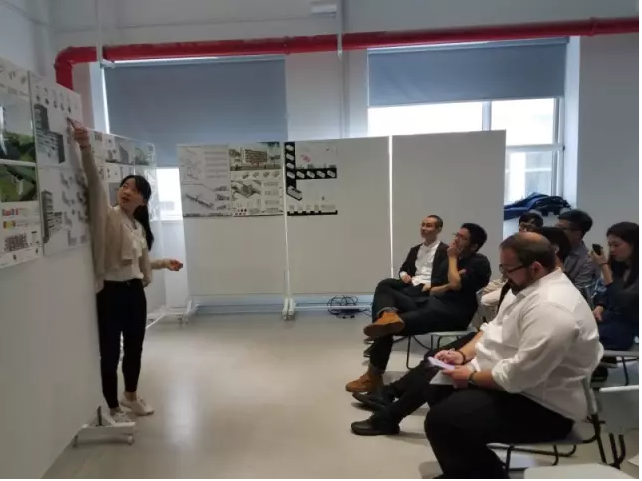
A couple of weeks ago we told you that Juan Goñi, architect at Klicstudio, would be taking part in a teaching programme at Nanjing University in China. For ten days, Juan would be teaching as a visiting professor in a workshop held at the university’s School of Architecture.
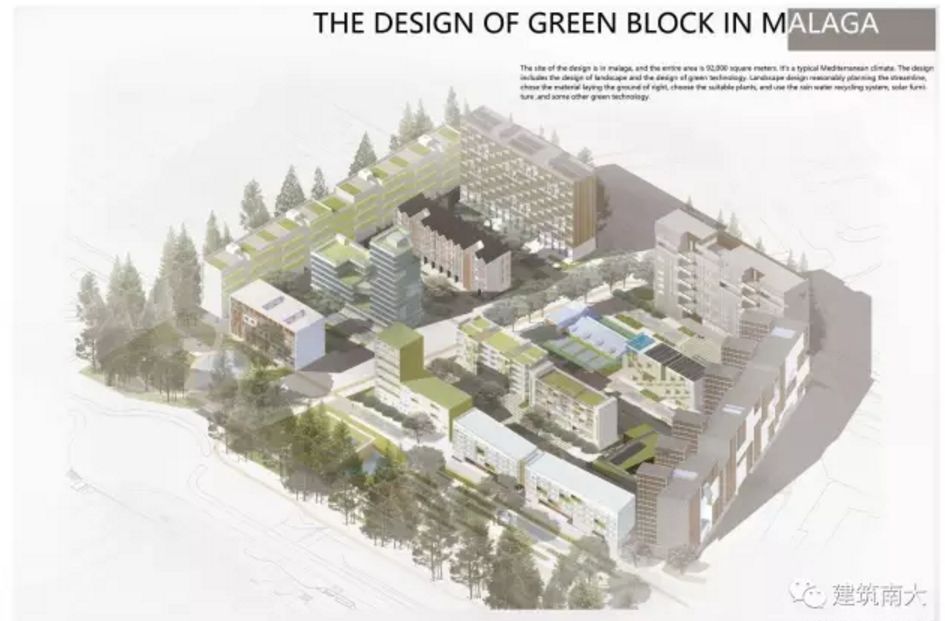
The workshop tackled a simplified version of the brief for the “Manzana Verde de Málaga” competition, whose entry deadline closed here in Málaga less than a month ago and which remains highly topical. The experience was a chance to compare and explore the strategies developed by a group of students from China who, although unfamiliar with the Málaga context to begin with, were free of constraints and preconceptions, and so able to put forward fresh solutions grounded in the principles of sustainability and energy efficiency.
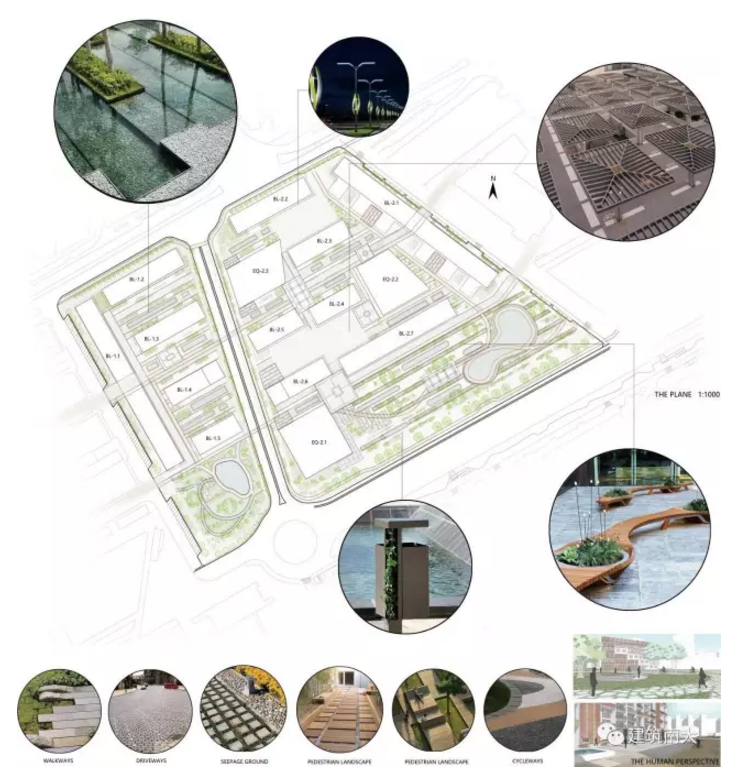
The students, all in the first year of their master’s in architecture, worked on an area of 94,000 m² to propose 963 homes along with infrastructure services and green spaces. Each had to take on one of the 16 plots into which the green block is divided: four perimeter housing buildings and eight internal ones, three for public facilities, and the public space. Nineteen students took part in all. The buildings were developed individually, and the public space by a group of four. Overall, the proposals were of a very high standard, all the more so given the tight deadline. As you can see in the accompanying images, the students combined passive strategies that make the most of sun, wind and rain with “circular” spaces where food is produced and waste is managed, while also providing communal spaces for people to meet.
Chinese students are certainly no strangers to these kinds of solutions: the staggering pace at which their cities are growing forces them to live with techniques that reduce human impact on the environment.
We invite you to take a look at some of the selected projects in the workshop brochure.