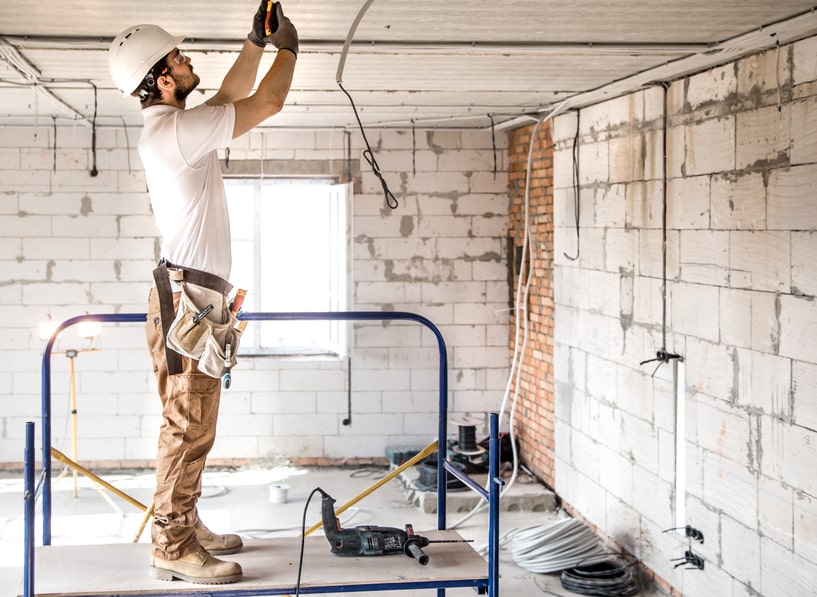
What is a full renovation? It is the question to ask when a home needs serious, in-depth remodelling, and it is well worth talking it through with architects in Málaga.
A full renovation means the complete, in-depth renewal of a space. It calls for a significant financial investment, but also for time, organisation and energy to conceive and achieve a completely renewed space.
What counts as a full renovation of a home under Spanish regulations
There is an official document, DB HR on protection against noise (Documento Básico HR, Protección frente al ruido), which sets out the basic rules and criteria for acoustic protection. DB HR must be applied to full renovations, which it defines as works in which the partitions, floor slabs and envelope of the rooms concerned are altered substantially and at the same time.
Applying these acoustic protection rules is compulsory in such cases, unless the building is of recognised historic and architectural value and could be seriously altered as a result.
The most important regulatory definition of a full renovation, however, is found in the Código Técnico de la Edificación (CTE, Spanish Technical Building Code), approved by Royal Decree 314/2006 of 17 March. In regulatory terms, a full renovation corresponds to rehabilitación (rehabilitation works), which the code defines as works whose purpose is:
- Structural upgrading, to guarantee the mechanical resistance and stability of the building.
- Functional upgrading, in the sense of removing barriers in order to improve accessibility.
- Remodelling of a residential building: works intended to change the floor area given over to dwellings, to change the number of dwellings, or to create new dwellings in a building that had none.
Meeting every requirement of the CTE and the noise protection documents calls for a sound architectural project. Complying with these technical requirements is one of the most decisive aspects of what a full renovation is, and it makes engaging qualified professionals essential.
When you should undertake a full renovation
There are cases in which a full renovation, or what regulations call rehabilitación (rehabilitation works), is particularly advisable. For example:
-
- When the electrical installation or the water pipework needs replacing. This is essential when the home to be renovated is more than twenty years old, and this kind of infrastructure work heads off future repair costs.
- When you want to change the layout of the home: for example, opening the kitchen onto the living room, enlarging that room, renovating the bathroom, and so on.
- When fairly costly materials are involved, especially if new floor coverings are planned, or when major rooms such as the kitchen or the bathroom are being remodelled.
- When you want to add insulation and climate control. With current energy efficiency regulations, more and more people are opting for these works. They bring considerable energy savings, all the more necessary at a time of high energy prices.
- When large, extensive air conditioning installations are planned.
- When you need to complete a change of use from commercial premises to a home (cambio de uso de local a vivienda).
These are the main cases in which a full renovation is the most advisable route. The process requires a technical project drawn up by architecture professionals. You also need to be very clear beforehand about the materials to be used, your needs and the time available to carry out the works: all of them important points when considering what a full renovation is.