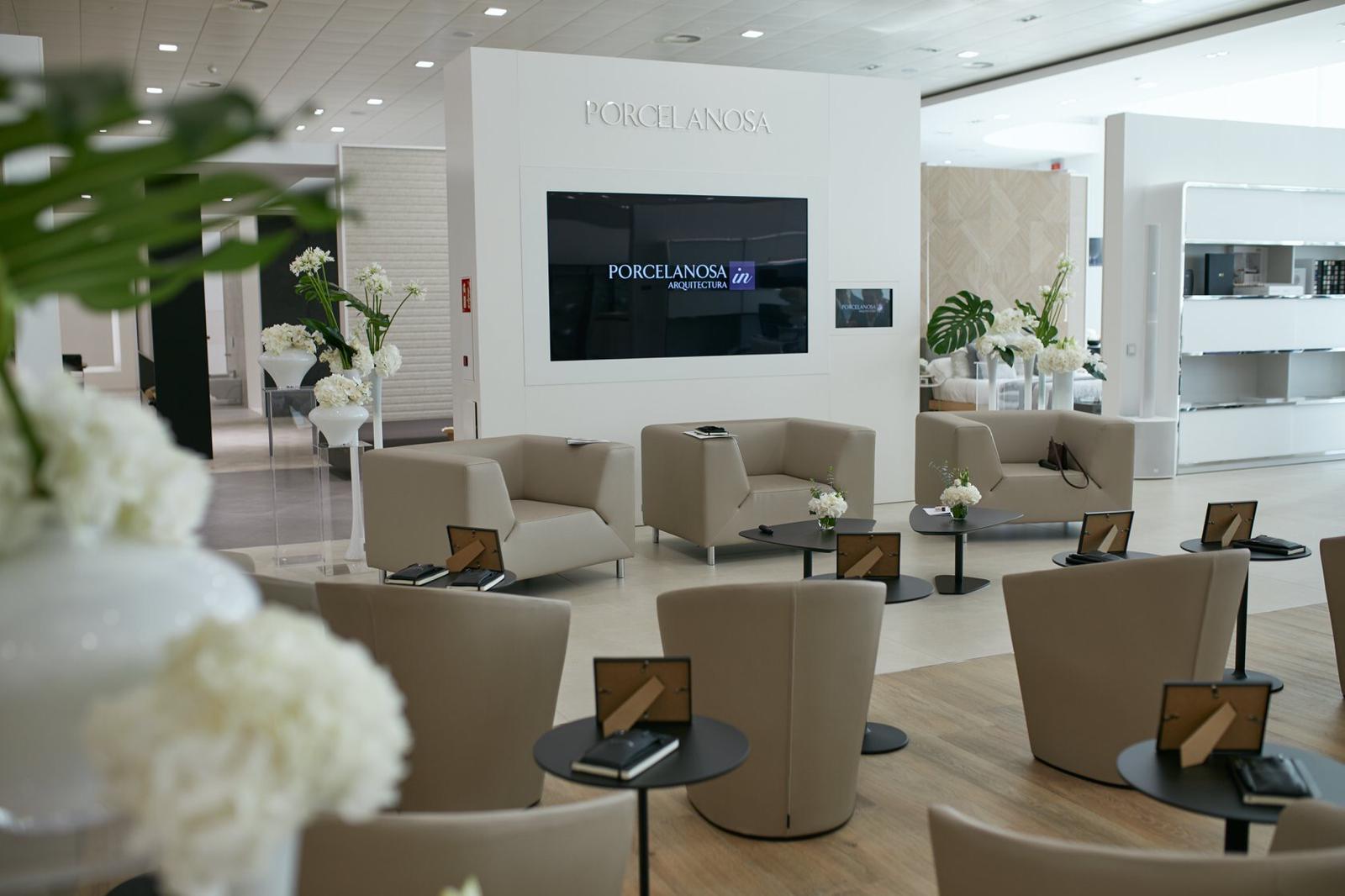
A round table with Málaga architects at the Porcelanosa Grupo showroom
On Thursday 13 June 2019 we were invited to Porcelanosa IN Arquitectura, an evening put together by Porcelanosa Grupo at its Málaga showroom.
It was the first event of its kind in Spain. More than twenty well-known Málaga architects were asked along to talk through a few of the questions the profession keeps circling: who controls how a building looks once it has been handed over, and why architects contribute so little to research in construction.
The first thing we noticed on arrival was the staging. Armchairs had been arranged in the middle of the showroom so that the architects could talk to one another the way you would in someone’s sitting room, rather than across a lectern. The decoration, the music chosen for the night and Porcelanosa’s own materials all around did the rest: the evening felt considered rather than corporate.
First to arrive was the architect Bernardo Pozuelo, who opened and chaired the conversation. As the other guests came in, each found a welcome present waiting on their seat: a personalised notebook with a sketch of one of their own projects. It went down very well.
Proceedings started on time, with the first topic of the night: the aesthetic “fragility” of current residential architecture. Nacho Carmona, of Porcelanosa Grupo, and Ruth Buján, of the Málaga architecture practice Klic Arquitectos, moderated, and Bernardo opened by setting out his own experience of the problem.
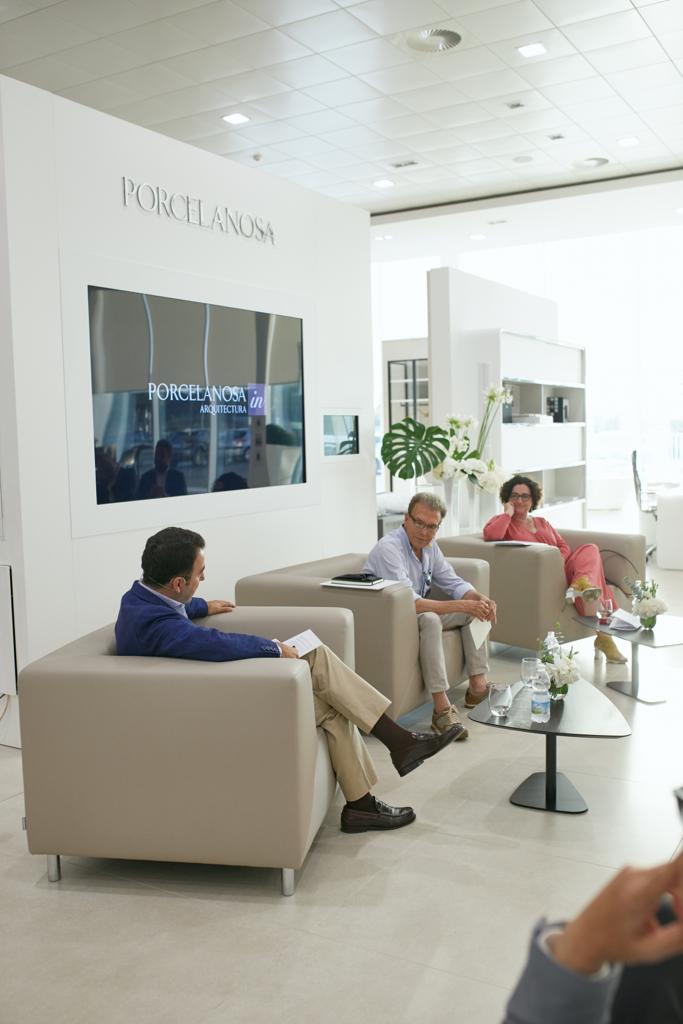
The first half turned on how little say architects have over what happens to a building afterwards. Once the work is handed over to the owner, it is often altered in ways that flatly contradict the original design. That produced some genuinely awkward questions. Should the authors of a building have a view on how it is changed? And if so, what would hold that view in place twenty or thirty years later? Three mechanisms came up: the Building Log Book (Libro del Edificio), the technical dossier that by law has to be handed over with every new building in Spain; the statutes of the owners’ association (estatutos de la Comunidad de Propietarios), which bind every owner in a Spanish block of flats; or planning legislation itself.
The opposite argument came up too, and it is the harder one to answer. Do architects have any business here at all, or should owners simply be left to get on with it? “Taste” is not a fixed quantity — it shifts with culture and with nationality, something you notice on the Costa del Sol, where a single block often has owners from several different countries.
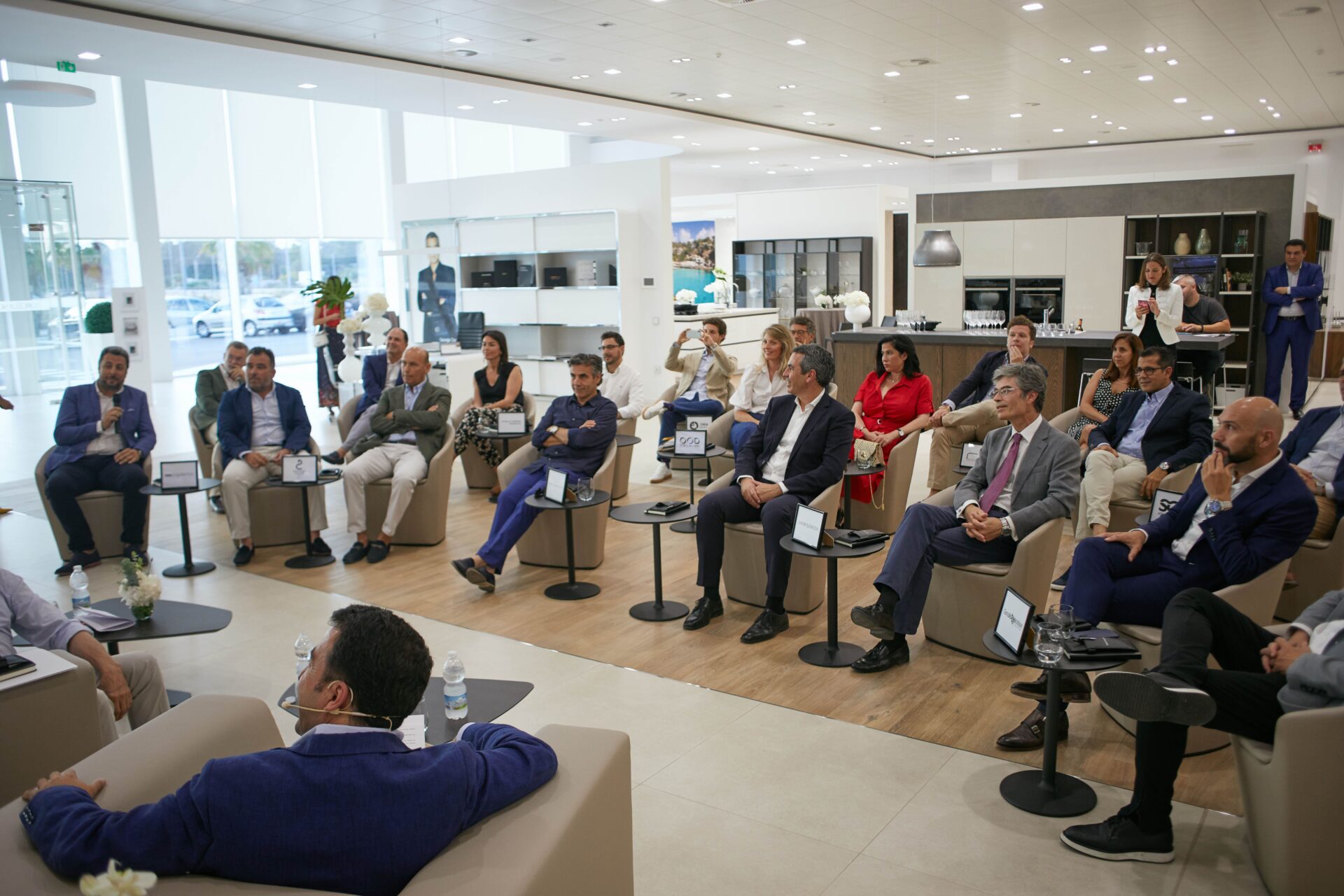
The second half dealt with how little architects take part in research and development within construction. The market does sometimes move faster than the profession, which keeps us forever playing catch-up — and that is exactly why the question stings. Are architects not the people who know most about new building materials? Are we the obvious ones to be doing the research, or are we quietly losing that ground to somebody else?
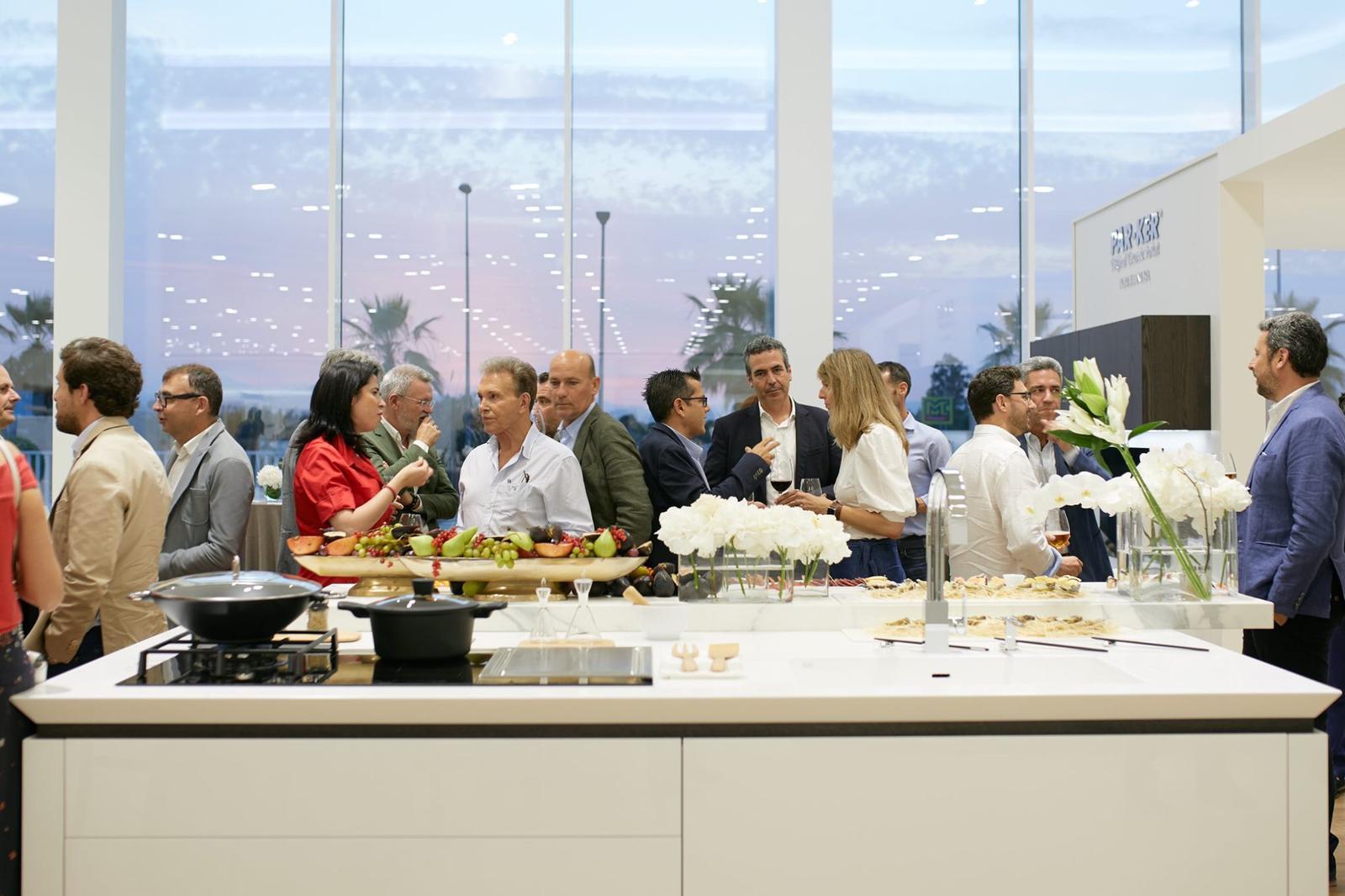
Once the round table finished, the Porcelanosa Grupo team laid on a very good spread in the showroom. Food and drink kept coming, and the guests spent the rest of the evening talking to one another in a relaxed, informal setting.
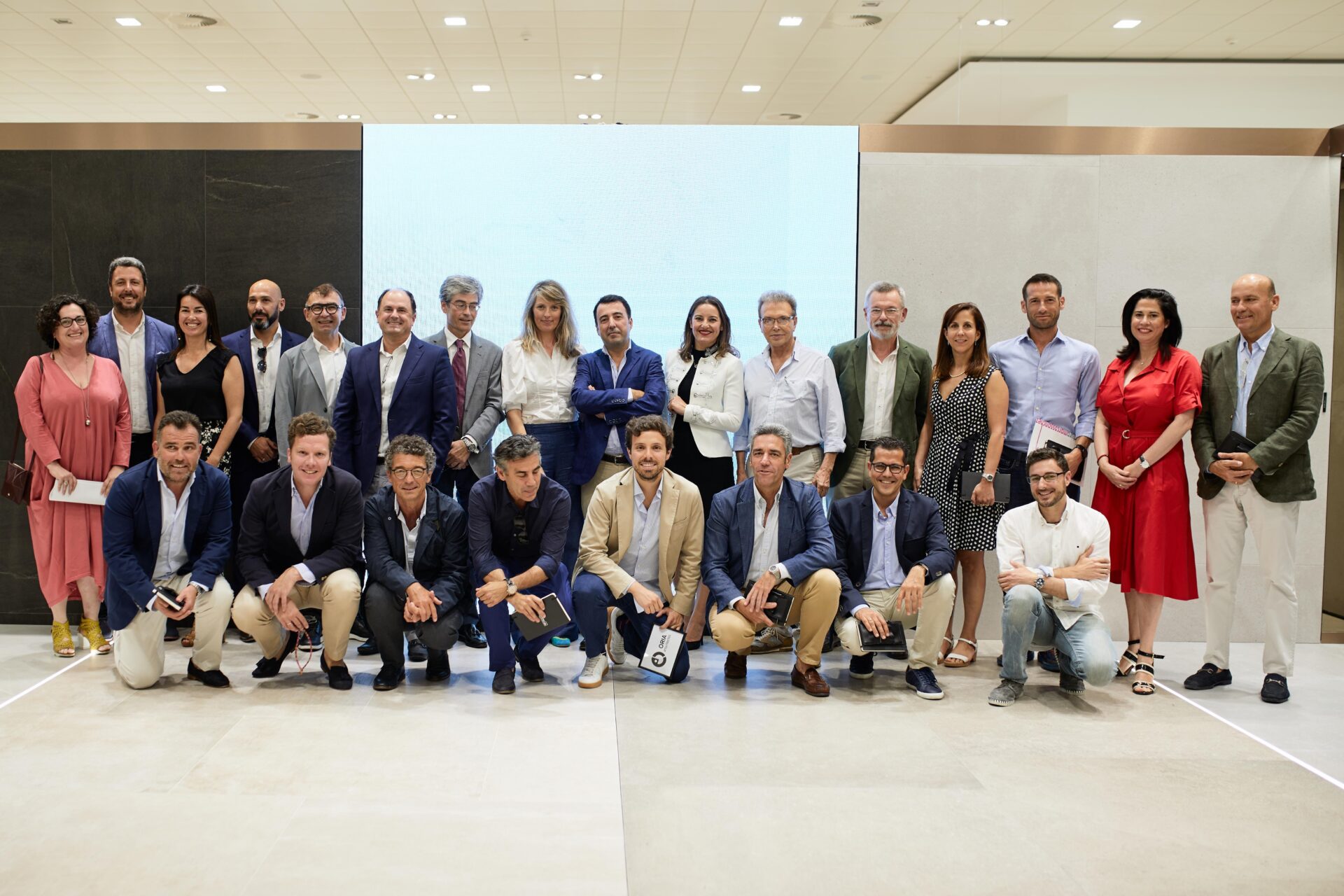
Last of all, the group photograph. In the centre are Nacho Carmona, of Porcelanosa, and Bernardo Pozuelo, the architect who chaired the debate. The other participants were: Ruth Buján of Klicstudio Arquitectura y Diseño, Sebastián Zolecio of SAZ Arquitectos, Paula París of Rodríquez-Losada Arquitectos, Diego Macías and Rodolfo A. Jacobson of González & Jacobson Arquitectura, Javier Alberro of Alberro Arquitectos, Juan Manuel Saura of Saura Arquitectos, Bettina Rosasco of OÖD Architects, Alejandro Pérez of HCP, Marta Santos of MS Arquitectos, Marcos Sánchez of Arquitectura Marcos Sánchez, Ana Morales of MO2 Archidesign, Emilio Domingo Corpas and Carlos Domingo Corpas of Domingo Corpas Arquitectura, José A. Mercado Vargas of Mercado Vargas Arquitectura, Juan Ramón Montoya Molina of Arquitecto Montoya Molina, Fernando Rodríguez of Feroca Arquitectura, Eduardo Oria of Oria Arquitectos, Salvador Cortés of SCV Arquitectura, Antonio Díaz Casado de Amezúa Arquitecto, Modesto García of ISMO Arquitectura y Diseño and Rafael Santa-Cruz of Santa Cruz y asociados Arquitectos.
At Klic Studio we would like to congratulate Porcelanosa Grupo on a first Porcelanosa IN Arquitectura that clearly worked, and thank them for the invitation. We enjoyed it a great deal, and we hope it becomes a regular fixture.