

The office ran with two of us, from September 2007 through to March 2008.
There was plenty of work in that stretch, and it thinned out steadily as the EPSA files were closed off one by one. EPSA is the Andalusian regional government’s public land and housing agency, and at that point it was our main client by a long way.
Around the same time Antonio finished his placement with us. The office needed an aparejador of its own — a quantity surveyor, in British terms. Someone who could sign and run the dirección de ejecución: the statutory role that supervises how a building actually gets put together on site. Until then I had been handling that through several outside aparejadores, with less control than I wanted. We also needed someone to take on study and drawing-office work, and Antonio fitted both jobs. To be able to sign, he had to register as self-employed (autónomo), arrange his own insurance and the rest of it. So we set the collaboration up on a TRADE contract — trabajador autónomo dependiente, an economically dependent self-employed worker. It sits close to a plain services contract. The difference is that it formally recognises the contractor’s economic dependence on one main client and, subject to conditions, fixes a fee for an agreed number of hours a week. There is no clean British equivalent. The advantage over a straight services contract is that a TRADE carries a right to unemployment benefit and to severance, agreed between the parties. Better for Antonio, and an honest description of how the two of us actually worked.
Two more people came in on placements around then. Atilia, an interior decorator with a formidable instinct for selling. And Natalia, a draughtswoman who had also qualified as an engineer in Russia: organised, hard-working, remarkably versatile, the sort who takes a request away and comes back with it solved. The truth is there was very little work in the office from the moment they arrived. We used the time anyway — built the website, did the rounds of managing agents (administradores de fincas) and lawyers, playing to what each of them was good at. It was an odd spell. I had money in the bank from all the work we had got through in 2007, which is what encouraged me to take trainees on. And almost nothing to give them to do. All that while, EPSA had had a grant scheme open since June 2007, and we assumed the avalanche would land any day. We had around 20 projects pre-assigned to us, and they had asked us to put a team together to cope with the volume.
The placements finished in June and the work still did not come. That settled it for Atilia: when her placement ended, I did not take her on. Natalia I did hire, with no work for her at that moment. Purely on the strength of how capable she was, and because I was sure she would be a serious help the second the work landed. Growing an architecture studio on the promise of work rather than on the work itself is a gamble. I took it because I was certain the work was about to arrive. So there were three of us… and I will tell you the rest next time.
)
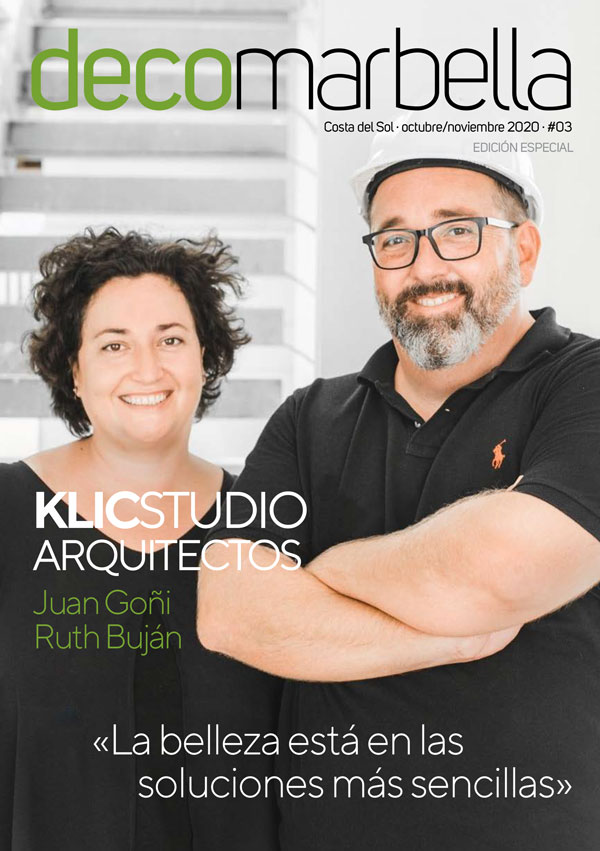
Juan Goñi and Ruth Buján, founders of Klic Arquitectos, talk about their project and their vision of architecture in this interview published in the specialized magazine DecoMarbella.